
A quick guide to paying for things in Portugal
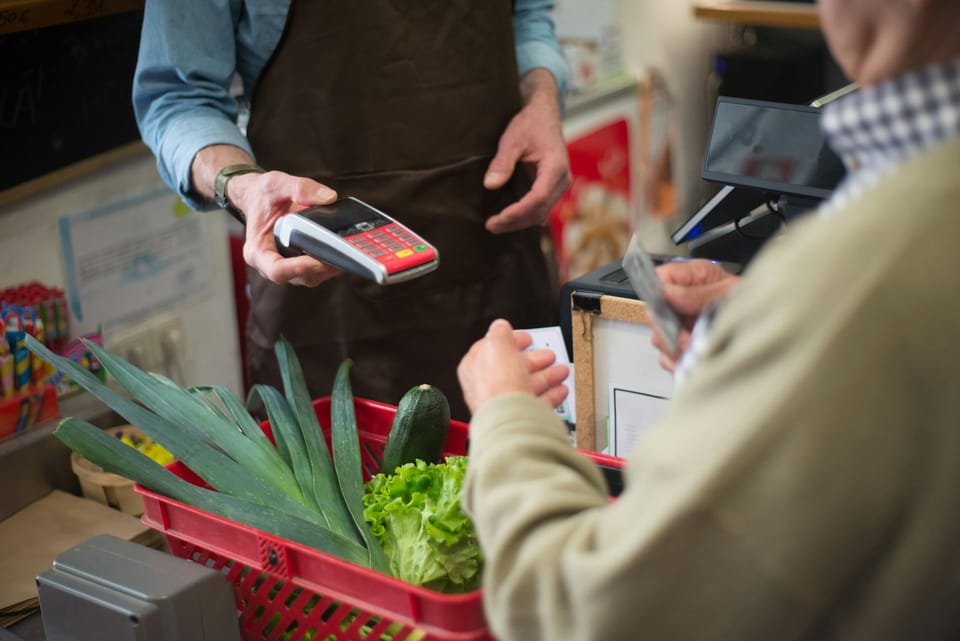
By now, you’ve probably paid for hundreds of transaction here in Portugal through a variety of payment methods ranging from cash, payment cards, using a credit card online, and maybe even an IBAN transfer or two. Apart from the IBAN transfer, this all feels pretty normal coming from the U.S., and it is easy to think you’ve just about mastered the process of paying for things here in Portugal. But, as I discovered over the last few years, there are actually a lot more options available. Turns out, the Portuguese banking system, specifically the Multibanco system, offers a wide range of payment options not found in the US.
Paying with cash
Cash is still a very common means of paying for goods and services here in Portugal. But, cash is no longer king. Western Europe has been well ahead of the US when it comes to deploying and using contactless payment. As a result, contactless payment is now the dominant and preferred means of payment in most situations. However, there are still many times when having some cash on hand helps. Also, important to note that, by law, an establishment must accept cash payment. There is another law that limits the amount for a cash payment to €3,000 to prevent money laundering and other financial crimes.
The prevalence of cash transactions will vary considerably based on location and establishment. Smaller and more rural communities are more likely to have cash-only establishments. I’ve also found that a great many of the local vendors at our mercado are cash-only, and prefer exact change when at all possible. But, in cities and larger towns, contactless payment is far more common.
Also, avoid larger euro notes; ideally nothing larger than a €20 note. This is purely anecdotal, but it seems like the only time I’ve seen a €50 note was when someone withdrew cash from a Euronet machine instead of a Multibanco machine.
Getting cash
The most important thing to remember when withdrawing cash from an ATM is to use the right machine. Only use machines with the Multibanco logo.
The other machines, such as the Euronet machines, are aimed at tourists and are notorious for providing a poor exchange rate and charging additional fees. Avoid these tourist machines, and only use as a last resort, knowing you will pay a fee.
The second most important thing to remember is to use your Portuguese bank card for cash withdrawals. Using a US card means you will be presented with the option to withdraw money based on a USD amount (dynamic currency conversion). You will always need to remember to decline that and only withdraw in euros, or risk fees and a bad conversion rate. There’s additional risk of your US bank charging a foreign ATM fee on the transaction.
Finally, you’ve moved to a new country, and using that country’s banking system is an critical step in adopting and assimilating.
Finally, I would avoid larger withdrawals. Unless you have a specific large purchase that needs cash, having more than €60-80 in cash on you at any time is really not necessary.
Paying with contactless
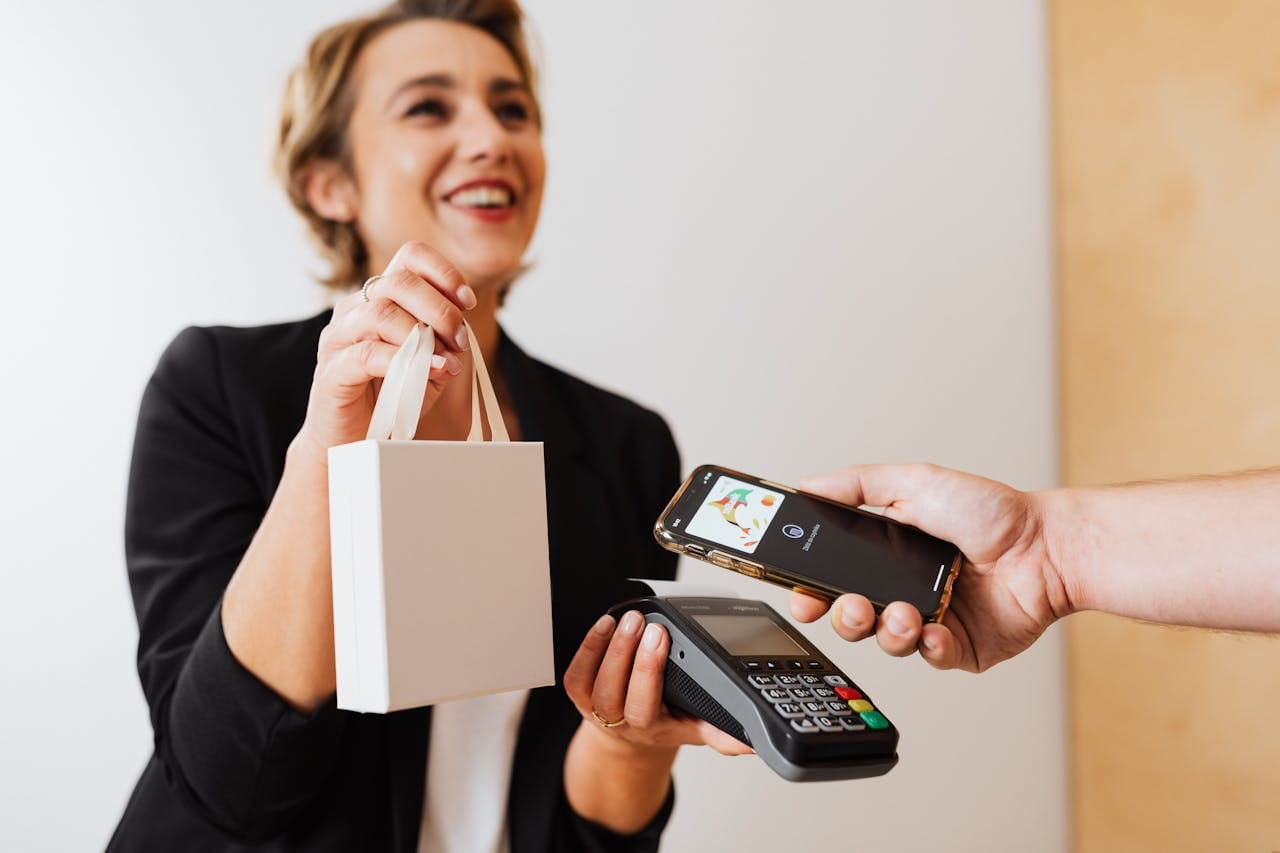
In my experience, paying with contactless should account for the vast majority of your purchases. In most shops, cafés, bars, and restaurants, it is the default, typical form of payment. These handheld contactless point-of-sale payment terminals are everywhere. Nearly every grocery store has these available, too. Paying using contactless is quick and secure. Once you have it setup and are comfortable using contactless, you’ll find it difficult to pay any other way.
Using a contactless card
Once you’ve been shown the price, the clerk (or self-checkout machine) will enter the transaction total into the POS terminal. After you verify the amount entered, you can tap your card on the terminal to pay. When tapping, you want the chip on your card to be as close as possible to the reader. On the handheld units, that is typically at the top of the device, above the LCD screen. That’s about it.
(Side note: this also demonstrates the absurdity of using an RFID blocking wallet).
Setting up the digital wallet on your smartphone
Using your smartphone’s digital wallet to pay with contactless is easily my favorite way to pay in person for most goods and services. Using Google Pay or Apple Pay is the most convenient and secure way to pay, once you have set up your payment cards on your phone.
For example, I have the following payment methods set up in my wallet app on my iPhone:
- My Portuguese bank ATM card
- My Portuguese bank credit card
- My US credit union ATM card
- My Apple Card
- My Wise debit card
I have a CapitalOne credit card, but I am unable to add it to my Apple Wallet app unless I am in the US ¯_(ツ)_/¯
My default payment card is my Portuguese bank ATM card, but I can easily switch to another card if needed. Because this payment method is protected by an extra layer of biometric authentication, Face ID or Touch ID, I have an extra layer of security for the already very secure contactless payment process.
What cards should I use for contactless payment?
You will have the easiest time using your Portuguese ATM card, followed by your Portuguese credit card, then your US ATM card, and finally, your US credit card. Most US credit cards are still chip and signature cards, and may require signing for the purchase, an extra step most store staff here won’t be familiar with, unless in a very touristic location. Small purchases, typically less than €50, should go through fine. Larger purchases may require a signature, or you may even be asked to enter a PIN.
In addition, using your Portuguese bank card means lower fees for the merchant. Merchants in Portugal generally pay a card acceptance cost made up of interchange, scheme, and processor fees, and the exact total varies by provider and card type. As a rough benchmark, Mastercard’s Portugal domestic interchange tables show consumer credit cards around 0.30% for contactless/chip domestic transactions, while commercial cards are higher, around 1.20% to 1.75% depending on tier and merchant size. Cards issued outside the European Economic Area (EEA) can be treated as cross-border transactions and are commonly pricier for the merchant than EEA consumer cards, which are capped at 0.20% for debit and 0.30%. Moreover, reward cards often sit in higher interchange buckets than plain consumer cards, so merchants will pay even more to process a payment.
| Card type used by customer | In-store merchant fee in Portugal | Online merchant fee in Portugal | Notes |
|---|---|---|---|
| EEA consumer debit card | Usually low; interchange capped at 0.20% | Usually low; interchange capped at 0.20% | This is the cheapest common card category for merchants. |
| EEA consumer credit card | Usually low; interchange capped at 0.30% | Usually low; interchange capped at 0.30% | Still relatively cheap versus commercial or non-EEA cards. |
| EEA commercial / business card | Higher than consumer cards | Higher than consumer cards | Commercial cards are typically pricier for merchants. |
| US-issued standard debit/credit card | Higher than EEA consumer cards | Higher than EEA consumer cards | Non-EEA cards are often treated as cross-border and priced higher. |
| US-issued rewards / premium card | Often highest | Often highest | Rewards and premium cards are usually in more expensive interchange tiers. |
So think twice before pulling out your Chase Sapphire Reserve® card to pay for a coffee and pastel de nata.
SEPA/IBAN transfers
Up to this point, I’ve been writing about payment methods familiar to most Americans. While there are some important differences between using these methods in the US vs Portugal, they are at least known to most Americans. Here’s where things get interesting. First up, SEPA/IBAN transfers.
- Single Euro Payments Area (SEPA) is the European payment system that lets you send euro payments across participating countries almost like a local bank transfer.
- IBAN (International Bank Account Number) is the account number you use to route that transfer to the correct bank account.
I’ve heard some people call this an IBAN transfer because it uses your bank account’s IBAN, but the payment system is SEPA, and that would be the more precise way to describe these transfers. As shown in the table below, most SEPA transfers are free or very low cost, with the recipient receiving the payment in a day or two.
| Scenario | Transfer Type | Expected Timeline | Typical Fees (Guideline) |
|---|---|---|---|
| Standard SEPA credit transfer in EUR to another SEPA country | SEPA Credit Transfer | 1 business day | 0 € (same as local wire) |
| Urgent / “same‑day” SEPA transfer in EUR | SEPA Urgent / Express | Same day or <1 day | Small fee (often €1–5) |
| SEPA Instant Credit Transfer | SEPA Instant | Seconds to a few minutes | Often 0 €, sometimes up to ~€0.20–0.50 |
| SEPA Direct Debit (recurring, e.g., rent or subscription) | SEPA Direct Debit | 1–2 business days | Usually 0 € for payer; may cost the merchant/biller |
SEPA transfers typically fall into two main categories: one-time and recurring transfers.
One‑time SEPA payment (e.g., paying a local service provider)
This is a standard SEPA credit transfer in euros, initiated by you from your bank account to the service provider’s IBAN.
How to do it (typical Portuguese bank / app):
- Log in to your banking website or bank app.
- Go to “Transfers” / “Transferências” → choose “To other country (SEPA)” or “SEPA / Outros Países SEPA” (even though the payee is local, this is often the path for SEPA‑IBAN transfers).
- Enter:
• Recipient’s full name
• Their IBAN
• Amount in EUR
• A reference like:
• Payment for garden service – April 2026
• Invoice #123
- Confirm the transfer (SMS code, app push, or token).
- The money usually arrives in the recipient’s account within 1 business day.
Cost: on most Portuguese banks, this costs the same as a domestic transfer, frequently €0 if local transfers are free through your bank.
Recurring SEPA payment (e.g., utility bill via SEPA Direct Debit)
This is handled as SEPA Direct Debit, where the company pulls the money each month instead of you sending it manually.
How it typically works:
- The company (utility, insurer, gym, etc.) sends you a mandate:
• On paper, or
• Embedded in their online portal / your bank’s portal. - The mandate includes:
• Your IBAN
• Your name
• The company’s creditor ID (their SEPA‑issuer code). - You sign or approve the mandate (electronic or wet‑ink), giving explicit consent for recurring pulls.
- After that:
• The company automatically takes the monthly amount from your account.
• You can cancel or block the mandate later via your bank (“Manage direct debits”) or by contacting the company.
Timeline: recurring SEPA direct debits are normally processed 1–2 business days before the due date.
Unless someone explicitly asks for it, I rarely use SEPA for one-time payments. But, for recurring payments, this is very common. We have all of our utility bills set for auto-pay through SEPA, and also have enabled SEPA payment for our tax bills.
Paying by entity reference
While SEPA payments are available throughout the EEA, Portugal has yet another great way to pay for things; payment by reference. Your option to use this payment method will largely be determined by the merchant, but it can be a very handy, safe, and easy way to pay.
The payment by reference process is managed by the Multibanco system.
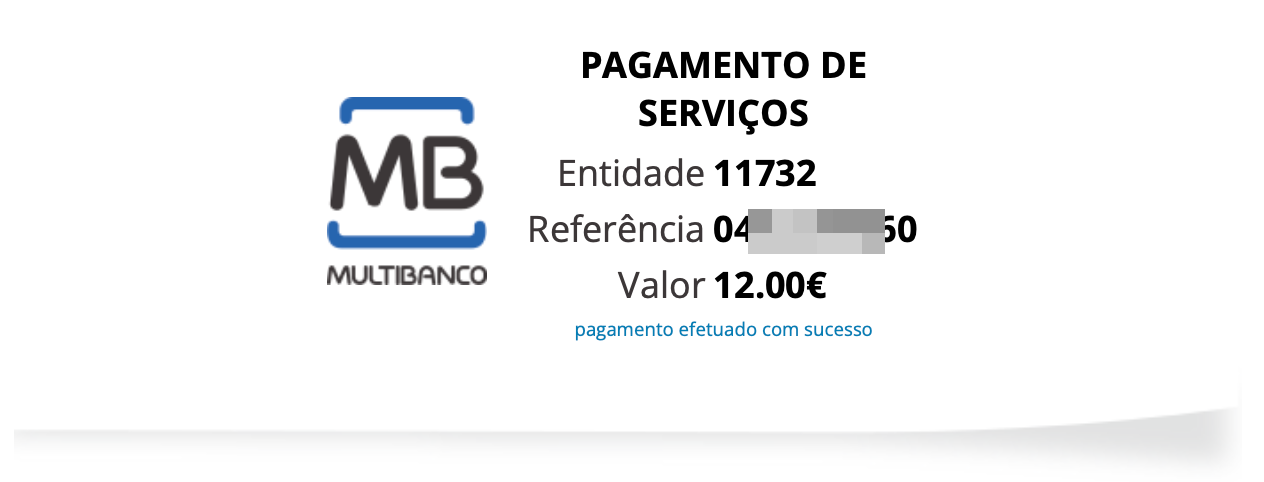
I’ve used payment by reference for various bills, including doctor and hospital bills. Here in Braga, we have the option to pay for our monthly bus pass this way. Towards the end of each month, I receive an email with an invoice and payment instructions like this:
How it works
The entity number identifies the payee, the reference number identifies the specific invoice/transaction, and the amount is usually pre-set by the invoice issuer.
How to pay it
You can typically pay in one of two ways:
• Online / app: go to payments, select payment by reference / payment of services / pay to entity, then enter the entity, reference, and amount.
• Multibanco ATM: choose the payments option, then enter the same three fields and confirm.
What it’s used for
This payment method is very common for:
• Utilities like electricity, water, and telecom bills.
• Taxes such as IMI or other Portuguese tax bills.
I typically pay using my Portuguese bank app, which gives me quick confirmation of the payment.
MB Way
Of all the unique payment methods available here in Portugal, MB Way might just be my favorite. I’ve heard some people compare MB Way to Venmo or Zelle, and in some regards that’s kind of correct, but it really misses many features and functionality available in MB Way. And, unlike those payment apps available in the US, MB Way is a core part of the Portuguese banking system and built into everyone’s bank account, available to use, with no need to install a third-party app or sign up for a third party service. There is no fee for using MB Way, and no third party to take their cut on the transaction. Over 3.5 million people in Portugal use MB Way to make over 9 million purchases each month.

To get started with MB Way you first need to make sure you have a Portuguese phone number. Afterward, you can set up MB Way directly in your bank’s app, or install the MB Way app and configure things that way. Once set up, you can then use MB Way to pay by either scanning a QR code displayed in a store or restaurant, or use the phone number.
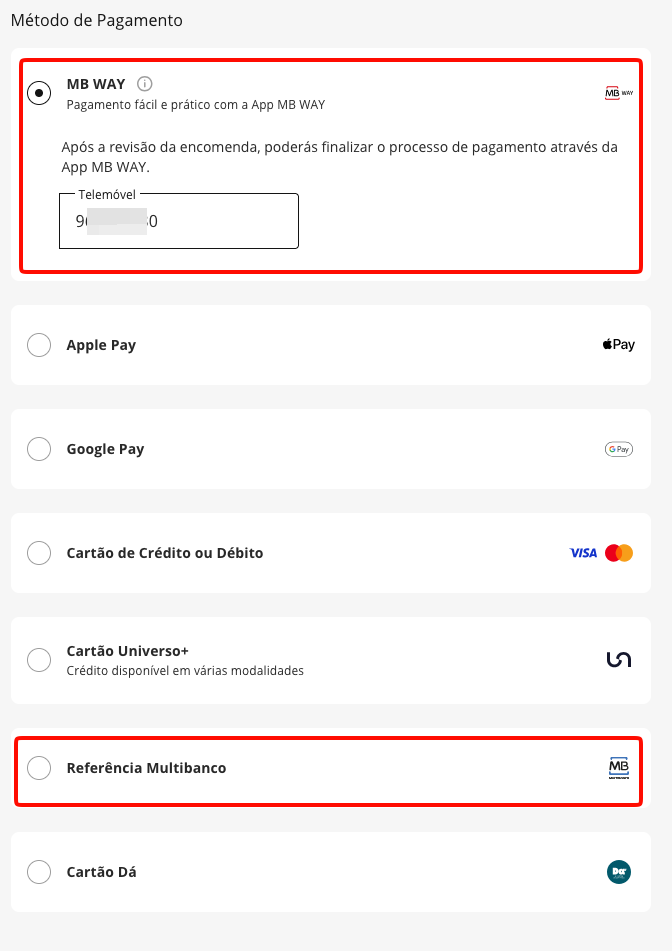
For example, I order groceries online through Continente’s website. On the payment page, I select MB Way, confirm my phone number and submit. I get a notice in my bank app to approve the purchase, which I do using Face ID on my iPhone. Immediately, the Continente website receives confirmation of the payment and completes the order. In this screenshot from Worten.pt, a leading home electronics retailer, you can see the variety of payment methods they accept, including both MB Way (featured) and the option to pay by reference (when selected, Worten will send you an invoice with their entity number, a reference number and the total for you to pay that way within 24 hours).
Another common use is to send people money, or have them send money to you. I sold on old desk recently, and all I had to do was share my phone number with the buyer, and he was able to pay me within seconds. If I need to send money to someone, I can do so through my bank app or the MB Way app. I enter the phone number for the person I’m sending money to, then enter the amount and send. That person gets the money almost immediately.
MB Way also provides for other ways to pay, too. Some banks let you make cardless ATM withdrawals via MB WAY or generate temporary virtual cards (MB NET) for online payments. MB Way also offers an NFC key fob device that you can load with money to use as a contactless payment method.
Special considerations for paying online
Using a US card on a Portuguese e-commerce website
At first, paying for an online order seems pretty straightforward, but there are a few problems you might encounter. Let’s start with using an American credit card to pay for online order from a Portuguese (or other European) merchant. Some Portuguese merchants use gateways that are picky about foreign cards, or they may accept Visa/Mastercard in theory but still reject some US cards in practice. Your US card issuer may require extra verification, and if the issuer’s authentication flow doesn’t complete cleanly, the payment can fail. And in some cases, cross-border online purchases can be flagged by your bank or the merchant’s processor as suspicious, especially if the merchant is in Portugal, and you’re paying with a US card.
Make sure your Portuguese bank has your Portuguese phone number linked to your account
A great many e-commerce sites in Portugal use a system called 3D Secure (often referred to as Verified by Visa or SecureCode) to authenticate the use of a credit or debit card for online payments. You enter your card details on the payment page, then submit the payment. Before confirming the order, a new screen shows up asking for a 6-digit security code that was sent by SMS text to the phone number on your bank account. If you still have your US phone number tied to your Portuguese bank account, this process will almost certainly fail, and as a result, cause the entire order to fail. As soon as you get a Portuguese phone number, visit your bank to update the phone number associated with your account and payment card.
Random thoughts
- Personal checks. These basically do not exist in Portugal. They are not an option available from your bank, and if you have a check issued in the US, you will likely not be able to deposit it at all here in Portugal. Avoid checks at all cost.
- Using US banking/credit cards - I would avoid using your US cards as much as possible while in Portugal. Outside the tourist zones, you will likely have more friction using these cards, and some merchants will refuse to accept a US card for payment. US card impose higher fees on the Portuguese merchants, too. I still use my US card when booking flights or some hotels, but otherwise, it is now just a backup. You live in a new country, so it is best to adapt to locally preferred payment methods.
Conclusion
I see a lot of my fellow US immigrants still clinging to their familiar and comfortable ways of paying for things. It took me a couple of years to understand the options available here in Portugal. It took a bit of effort to set up my banking here to use these new payment methods, too. But that effort has really paid off. SEPA, pay by reference, and MB Way now account for about 60% of all our transactions. Contactless with our iPhones handle about 30%, with the remaining 10% coming from US cards or cash. Hopefully, this article can help folks understand the greater range of payment options available in Portugal.
Member discussion